
Hell’s Gate National Park, Kenya
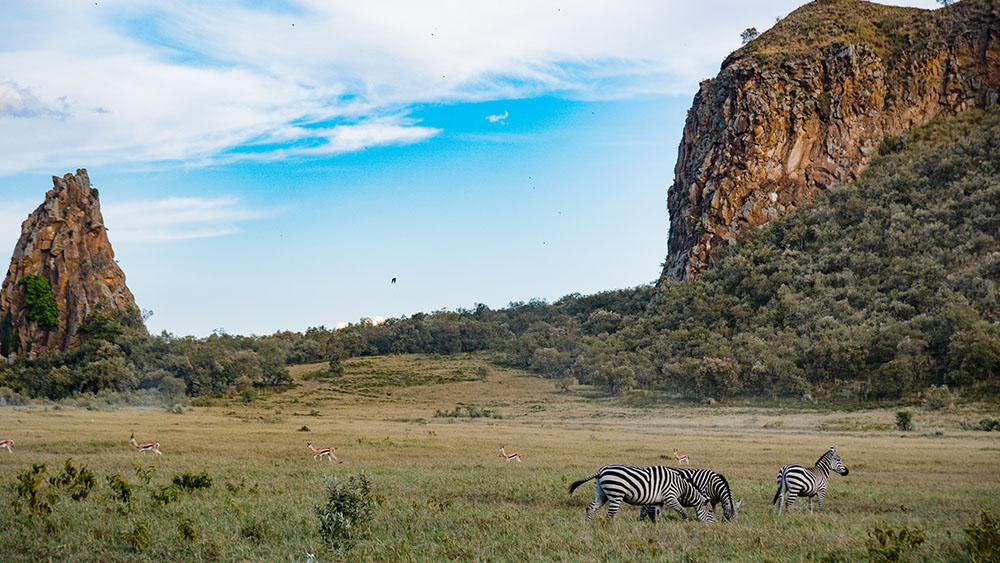
Nestled in the heart of Kenya’s Great Rift Valley, Hell’s Gate National Park is a captivating expanse of raw natural beauty, geological wonders, and abundant wildlife. The park can be reached directly or through services of tour operators. This relatively small park, covering about 68.25 square kilometers, lies near Lake Naivasha in Nakuru County, approximately 90 kilometers northwest of Nairobi. Named for its dramatic and steep-sided cliffs that create a “gate-like” entrance, Hell’s Gate offers visitors a unique and adventurous experience that stands apart from more traditional safari parks. Here, you can immerse yourself in the park’s dramatic landscapes, geothermal marvels, and rich biodiversity.
A Geological Wonderland
Hell’s Gate National Park is renowned for its striking geological formations that have been sculpted over millennia by tectonic activity and erosion. Towering cliffs, volcanic plugs, and deep gorges dominate the terrain, offering an awe-inspiring backdrop for exploration.
One of the park’s most iconic features is Fischer’s Tower, a 25-meter-high volcanic rock pillar. This dramatic structure is a remnant of ancient volcanic activity and serves as a popular rock-climbing site. Another standout feature is Central Tower, a pair of volcanic plugs that rise impressively from the valley floor.
The park’s name itself is derived from a narrow break in the cliffs that was once a tributary of a prehistoric lake. This geological gateway gives way to a sprawling landscape of grasslands, acacia woodlands, and hot springs. The Ol Njorowa Gorge is a must-visit, offering a labyrinth of steep, water-sculpted walls that hide geothermal springs and steaming vents. Visitors can hike through the gorge, marveling at its unique rock formations and learning about its cultural and geological significance.
A Haven for Wildlife
Despite its relatively small size, Hell’s Gate National Park is home to a surprising diversity of wildlife. Its open plains and sparse vegetation make it an ideal setting for spotting animals up close. Herbivores such as zebras, giraffes, Thomson’s gazelles, buffaloes, and elands roam freely, often seen grazing against the park’s dramatic backdrop.
The park is also a haven for predators like lions, leopards, and cheetahs, though sightings are relatively rare due to their elusive nature. Smaller carnivores like serval cats and hyenas are more commonly encountered. For bird enthusiasts, Hell’s Gate offers a paradise with over 100 recorded bird species, including vultures, augur buzzards, and the majestic Verreaux’s eagles that nest along the cliffs.
A Playground for Adventure
Hell’s Gate National Park is one of the few national parks in Kenya where visitors are encouraged to explore on foot or by bicycle. This unique feature allows for an intimate experience with the park’s landscapes and wildlife. Biking through the park’s winding trails is a popular activity, offering an exhilarating way to connect with nature. You can rent bicycles from local vendors near the park’s entrance or bring your own.
Rock climbing is another major draw, with Fischer’s Tower and the Central Tower providing exciting challenges for climbers of varying skill levels. Hiking through the Ol Njorowa Gorge is equally thrilling, as it requires navigating through narrow passages, climbing over rocks, and wading through shallow streams. Guides are often available to ensure safety and provide insights into the area’s history and geology.
For those seeking relaxation, the geothermal spa at Olkaria is a perfect retreat. The naturally heated pools, fed by the park’s geothermal springs, provide a soothing experience amid the park’s rugged surroundings.
Geothermal Energy and Sustainability
Hell’s Gate National Park is also notable for its role in Kenya’s renewable energy efforts. The Olkaria Geothermal Power Station, located within the park, is the largest geothermal power facility in Africa. The station harnesses the geothermal energy from the park’s underground reservoirs to produce electricity, contributing significantly to Kenya’s energy supply.
Visitors can learn about the park’s geothermal activity and its integration into sustainable energy production through educational tours. The power station exemplifies how natural resources can be utilized responsibly while preserving the surrounding ecosystem.
Cultural and Historical Significance
The park holds cultural and historical importance for the local Maasai community, who have lived in harmony with the land for centuries. The Maasai refer to the park as “Njorowa,” meaning “a place of narrow gorges.” Visitors can engage with the Maasai people through cultural tours that provide insights into their traditions, customs, and deep connection to the environment.
Hell’s Gate has also inspired popular culture. The dramatic landscapes served as a visual reference for the Pride Lands in Disney’s animated classic, The Lion King. This connection has made the park a favorite destination for fans of the film, who seek to experience the inspiration behind its iconic imagery.
Conservation and Challenges
Hell’s Gate National Park is managed by the Kenya Wildlife Service (KWS), which works tirelessly to protect its unique ecosystems and wildlife. Conservation efforts focus on maintaining the delicate balance between tourism, energy production, and environmental preservation.
Despite these efforts, the park faces challenges such as habitat degradation, climate change, and human-wildlife conflicts. Community involvement and sustainable tourism practices are essential to ensuring the park’s long-term health and vitality.
Accessibility and Visitor Information
Hell’s Gate National Park is easily accessible from Nairobi, making it an excellent choice for a day trip or weekend getaway. The drive to the park takes approximately two hours, and the roads leading to the park are generally in good condition.
The park offers a range of accommodations to suit different budgets, from luxury lodges to budget-friendly campsites. For those who prefer a more immersive experience, camping within the park provides a chance to connect with nature under the stars.
The best time to visit Hell’s Gate is during the dry seasons, from June to October and January to February. These periods offer ideal weather for outdoor activities and wildlife viewing.
A Unique Experience
Hell’s Gate National Park stands out as a destination that combines adventure, natural beauty, and cultural significance. Whether you’re scaling volcanic cliffs, cycling alongside zebras, or marveling at the geothermal wonders, the park offers an unforgettable journey into the heart of Kenya’s Great Rift Valley.
This remarkable park is more than just a place of striking landscapes and diverse wildlife—it is a testament to the power of nature and humanity’s ability to coexist with it. Hell’s Gate National Park invites visitors to step through its “gate” into a world of discovery, exploration, and wonder.


